
Better insight for better care. Optimized pediatric scanning at TUM University Hospital, Munich, Germany
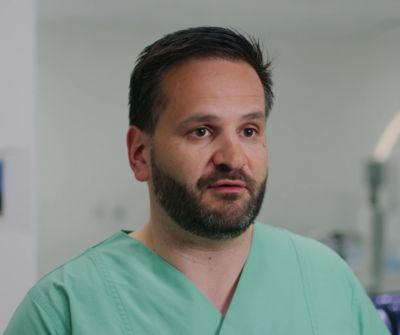
The longer children lie in the scanner, the more difficult it is for them to stay calm. That is why we aim to acquire as quickly as possible.
A lifetime of follow-up
For children with congenital heart disease, MRI is rarely a one-time examination. They may return for regular follow-up over many years, with each scan helping care teams assess the heart’s structure and function over time. For families, each visit can bring uncertainty. Paul’s mother describes the questions that arise before an examination: what the results may show, and whether further intervention could be needed. A familiar care team and a clear understanding of what to expect can help make these moments easier to navigate.
Less time in the scanner
Cardiac MRI requires children to remain still while the heart is beating and they are breathing. The longer they need to lie in the scanner, the more difficult it can become to lay still. At TUM University Hospital German Heart Centre, the team uses faster acquisition sequences with SmartSpeed Precise [1] on the Philips Elition X 3.0T, to acquire the images needed in less time. This helps reduce the time children spend inside the bore, while supporting the consistent images needed for ongoing follow-up.
This one is quieter than the old one. And it’s also faster. I came here and then it was gone. Thirty minutes. I thought: that wasn’t long at all.
Building confidence with every visit
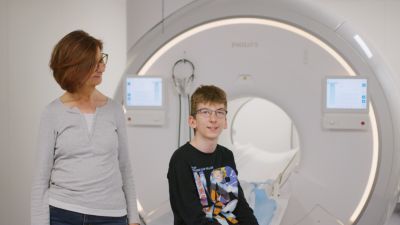
For Paul, the MRI experience has changed over time. What first felt loud and unfamiliar now feels quicker and more familiar. During the examination, he can choose a movie to watch, while the team explains what will happen and helps him feel at ease. For his mother, these details help build confidence in the experience. The anxiety around results may remain, but confidence in the care team, the images and the next examination can grow with every visit.
Cardiac MRI experience, through a child's eyes

